



一嗅心安,万事从容,芳香心理照护师初级认证课程第一期圆满结业
#AI照护与医疗科技 时间2026-06-02 11:13:05
从一个构想,到一批照护师
2025年,芳香心理照护师三级认证体系框架正式提出。同年12月,顾刚博士面向公众连续举办三场公开课,反响热烈,为正式课程的推出奠定了基础。
2026年,首期招生正式启动。同年4月,芳香心理照护师初级认证课程(APC-1)在众多期待中如期开课,历时约两个月,每周两次课,每次两学时,合计十七次课、三十四学时,第一批学员携带着各自的精油包,在气味与心灵的探索中,完成了一段难忘的学习旅程。
2026年5月底,第一期学员正式结业。
这是一个开始,也是一种抵达。
关于导师
顾刚博士,笔名顾歌,知名心理学者,执业逾二十三年。著有包括《一个抑郁男孩的30小时》《爱可以不伤》《芳香心理学》等十本著作。现任美国国际智能照护协会(IAICA)智能心理学项目主管,美国心理学会(APA)会员,中国作家协会上海分会会员,上海外交协会会员,复旦大学高级心理学项目(EDP)讲师,心灵花园®品牌创始人,曾任上海潮乐临床心理诊所主任。
二十余年的心理咨询积淀,造就了顾刚博士“芳香心理学”三套原创理论框架——芳香心理人格谱(APP)、芳香心理整合模型(APIM) 与 芳香心理五步疗法(APT)。这三套体系以嗅觉神经科学为基础,融合西方心理学理论与中医情志理论,形成了一套东西贯通、身心并重的芳香心理照护方法论。芳香心理照护师职业能力规范知识产权登记号:甘作登字—2026-A-43763703
顾刚博士不只是学者与心理咨询工作者,更是数次深入重大危机现场的心理援助志愿者。2008年四川汶川地震后,他作为上海市政府派遣的心理援助工作者奔赴绵阳九洲体育馆,参与灾后心理重建;2010年上海1115火灾后,他第一时间介入幸存者及遇难者家属的危机心理干预;2011年"7.23"甬温线动车追尾事故后,他参与了铁路系统的心理援助工作;2009年"7.5"事件之后,他亦积极赴疆参与医疗界人士的心理援助与危机干预行动。这些经历在他身上留下了深刻的印记,也深刻影响了他对"照护"这一概念的理解——照护,从来不是居高临下的给予,而是平等的陪伴与见证;是在最难的时刻,稳稳地在那里。
顾刚博士的授课风格,正如他的笔名"顾歌"所承载的气质——以幽默的临床观察穿插真实案例,以文学典故点亮枯燥的专业知识,以海派的直接与温度,把每一堂课变成一次真正意义上的心灵照护体验。
课程历程:一场关于气味与人的完整旅程
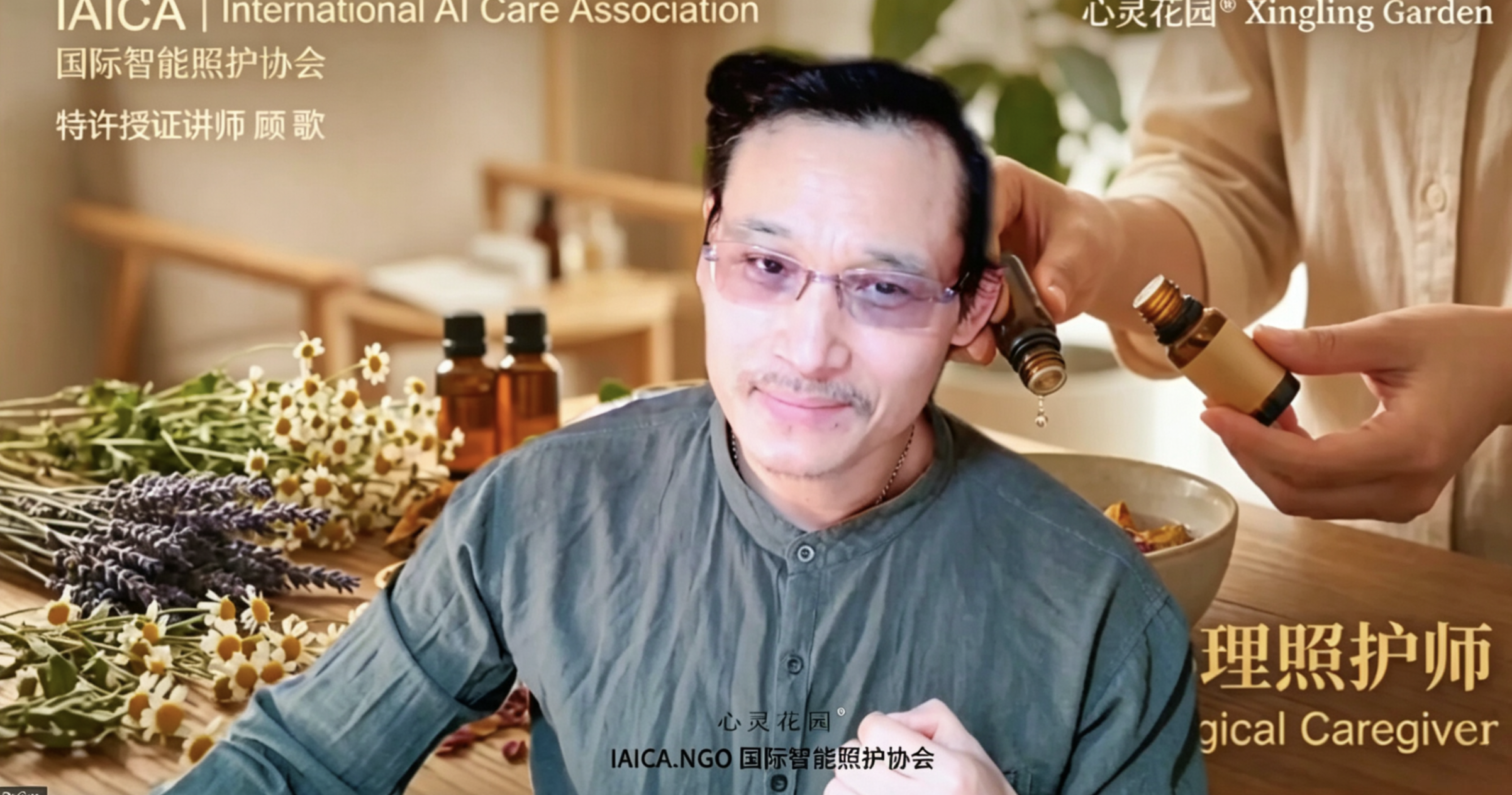
本期课程按五大模块递进展开,涵盖从理论认知到临床实操的完整照护能力培养体系。
模块一·认知基础(第1-4次)
从嗅觉的神经通路讲起——为什么一缕气味能在0.1秒内穿越理性防线,直达情绪记忆?香料五千年文明史如何塑造了人类的情感编码?APIM三层模型(生物层·心理层·意义层)如何解释气味对人的深层作用?以及,作为照护师,"Care"与"Cure"的本质区别究竟在哪里?这四次课,为整个学习旅程奠定了扎实的理论地基。
模块二·安全基础(第5-7次)
在气味之前,安全第一。六类特殊禁忌人群、光敏性精油的使用守则、服务前必须完成的五个必问问题、十二种核心精油的感受与辨识、嗅觉评估的四维观察框架(生理反应·情绪反应·联想内容·行为倾向),以及三条不可逾越的照护红线——安全,是所有照护工作最重要的前提。
模块三·状态识别(第8-12次)
这是课程中信息密度最高、临床价值最深的模块。六种身心失衡状态——飘着、硬着、暗着、冻着、空着、散着——每一种都有它的名字、它的画面、它的气味方向,以及来自心理学与文学的深度注解。学员不只是在学识别他人的状态,也在学识别自己走过的那些地方。
模块四·照护技术(第13-15次)
嗅觉安全锚的三步建立法、陪伴三法(在场·等待·跟随)的反本能训练、照护关系的三阶段建立与边界管理;社区照护、亲子支持、老年照护、哀伤照护、职场EAP——五种真实场景的照护策略,配合完整的照护决策流程图与综合情境练习。
模块五·伦理规范与结业(第16-17次)
职业伦理不是规则清单,是照护师经历了真实的工作之后,从内心生长出来的专业自律。APC-1的五条服务边界、六条禁止行为、完整服务流程七节点、转介三步法、照护师的自我照护……最后,综合考核,颁证,结业式,以及一封写给三个月后自己的信。
学员风采:带着各自的故事而来
第一期学员来自社区照护、家庭教育、老年服务、企业人力资源、心理咨询辅助等不同领域,也有对芳香心理学充满好奇的普通学习者。
每次课开场的正念安顿、每次作业的真实观察与感受分享、每次情境练习中学员们说出的那些"最难熬的时刻"——这些构成了这门课最珍贵的部分。
一位学员在最后一次课上说:"我以为我来学的是精油知识,结果我学到的,是怎么陪一个人。"
另一位学员写道:"那六种状态,我走过了其中的四种。我现在知道了它们的名字,也知道了气味可以做什么。"
还有人说:"最难的不是记住哪种精油对应哪种状态,是那个'等待'——学会什么时候不动,比学会什么时候动,要难得多。"
AI时代的价值:气味照护,语言不可替代的通道
在大语言模型日益强大的今天,人们越来越多地向AI倾诉烦恼、寻求建议。以语言为主导的心理支持,正在被AI以惊人的速度复制和规模化。
但芳香心理照护,提供的是AI目前无法触达的那个维度。
嗅觉是人类唯一不经过丘脑审查、直接到达边缘系统的感觉通路。 它绕过了语言,绕过了理性防御,在0.1秒内激活情绪记忆,触碰意识之下的情感储存。这条通路,语言进不去,文字到不了,屏幕无法传递。
一个AI可以完美地说出"你失去了一个非常重要的人"——但它无法让一缕乳香悄悄弥漫在空气里,和那个失去共同停留在那一刻。
在场的照护师,带着气味,用陪伴三法(在场·等待·跟随)工作,提供的是具身的、感官的、当下的陪伴——这是所有以文字和语言为介质的支持形式所无法给予的。
更重要的是,芳香心理照护不是对心理治疗的替代,而是对AI无法触达的人类情感维度的填补。在心理咨询资源稀缺、人与人之间真实陪伴日益减少的时代,这个填补,弥足珍贵。
未来:AI照护时代的含金量
芳香心理学理论体系的构建是基于大量的临床实践和观察基础上的全新的心理介入方法,由顾刚博士近五年来在IAICA心理项目组同事以及上海潮乐临床心理诊所及上海外服心理援助中心同仁的鼎力协助下创立,而其创立本身就是对AI时代照护议题的一次前瞻性回应。
AI可以分析数据,但不能感受气味。AI可以生成话术,但不能建立真实的关系。AI可以提供信息,但不能在一个散着的人崩溃的那一刻,稳稳地在那里。
未来,随着老龄化社会的加速到来、职场心理健康需求的爆发性增长、以及AI大规模替代部分人工服务所带来的人机协作新格局——能够提供具身照护(Embodied Care)的专业人员,其稀缺性和价值将持续上升。
APC-1(芳香心理照护员·一级)是这条职业发展路径的起点。未来的 APC-2(芳香心理咨询师·二级,60学时)将掌握 APP 完整人格评估图谱与 APT 五步干预框架;APC-3(芳香心理督导师·三级,120学时)将具备督导、团队领导与体系建构的能力。
在这个人与人的真实连接越来越稀缺的时代,一个懂得如何用气味、用在场、用陪伴走近另一个人的照护师,是无论多么强大的AI都无法复制的存在。
结语
一嗅心安,万事从容。
半生浮沉,一香相逢。
感谢第一期所有学员,带着你们各自的精油包,带着你们生命里的故事,走过了这两个月、三十四学时的旅程。
你们不只是学了一套照护技术——你们多了一种方式,去读懂一个人,然后走近他。
那个方式,会在你们的手里,一次一次地生长。
IAICA 美国国际智能照护协会
芳香心理照护师初级认证课程 · 第一期
报名咨询及下期课程信息,请关注iAIca.com.cn官方平台。
One Breath, One Peace
IAICA Aromatic Psychology Caregiver Certification Programme — First Cohort Graduation
From a Vision to a Cohort of Caregivers
In 2025, the framework for the three-tier Aromatic Psychology Caregiver Certification System was formally introduced. That December, Dr. Gu Gang delivered three consecutive public open lectures, generating significant interest and laying the groundwork for the launch of the full programme.
In 2026, enrolment officially opened. The Level 1 Aromatic Psychology Caregiver Certification Programme (APC-1) commenced in April of that year — two sessions per week, two hours per session, seventeen classes in total, thirty-four contact hours — and concluded at the end of May. Over those two months, the inaugural cohort carried their essential oil kits through a remarkable journey at the intersection of scent and the human psyche.
The first cohort has graduated.
This is both an ending and an arrival.
About the Instructor
Dr. Gu Gang, pen name Gu Ge, is a clinical psychologist with over twenty-three years of practice. He is the author of ten published works, including Thirty Hours with a Depressed Boy, Love Without Hurt, and Aromatic Psychology. He currently serves as Director of the Intelligent Psychology Programme at the International AI Care Association (IAICA), and holds memberships in the American Psychological Association (APA), the Shanghai Branch of the Chinese Writers' Association, and the Shanghai Foreign Affairs Association. He is a lecturer in the Advanced Psychology Programme (EDP) at Fudan University, founder of the Heart Garden (心灵花园) brand, and formerly Director of Shanghai Chaole Clinical Psychology Clinic.
Over more than two decades of clinical immersion, Dr. Gu developed three original frameworks under the banner of Aromatic Psychology: the Aromatic Personality Profile (APP), the Aromatic Psychology Integration Model (APIM), and the Aromatic Psychology Therapy (APT) five-step protocol. Grounded in olfactory neuroscience and integrating Western psychological theory with Traditional Chinese Medicine's emotional philosophy, these frameworks form a coherent East-West methodology for aromatic psychological care.
Dr. Gu is not only a scholar and clinician — he has served as a psychological first-responder across multiple major crises. In 2008, he was dispatched by the Shanghai municipal government to Jiuzhou Stadium in Mianyang following the Wenchuan earthquake, where he participated in post-disaster psychological reconstruction. In 2010, he provided immediate crisis intervention following the November 15 Shanghai apartment fire, working with survivors and the bereaved. In 2011, he participated in the psychological relief effort following the July 23 high-speed rail collision in Wenzhou. In 2009, he also travelled to Xinjiang to provide psychological support and crisis intervention specifically for medical professionals in the aftermath of the July 5 incident.
These experiences left a lasting mark — and they profoundly shaped his understanding of care: that to care is never to give from above, but to bear witness as an equal; to stand steady in the room at the hardest moment.
Dr. Gu's teaching style carries the quality of his pen name — weaving dry clinical wit with authentic case studies, illuminating technical knowledge through literary allusion, and transforming each session into a genuine caring experience in its own right.
The Curriculum: A Complete Journey Through Scent and the Human Condition
The programme unfolded across five progressive modules, cultivating a full spectrum of caring competencies from foundational theory to real-world practice.
Module One · Cognitive Foundations (Sessions 1–4)
Why can a single scent bypass rational defences and activate emotional memory in just 0.1 seconds? How has five thousand years of aromatic civilisation shaped humanity's emotional encoding? How does the APIM three-layer model — Biological, Psychological, and Meaning layers — explain the deep influence of scent on the human being? And what is the essential distinction between Care and Cure? These four sessions laid the theoretical groundwork for everything that followed.
Module Two · Safety Foundations (Sessions 5–7)
Before the oils, safety first. Six categories of contraindicated populations, guidelines for photosensitive oils, the five pre-service essential assessment questions, identifying and experiencing twelve core essential oils, the four-dimensional observational framework (Physical Response · Emotional Response · Associative Content · Behavioural Tendency), and the three non-negotiable red lines of safe practice — safety is the non-negotiable prerequisite for all caring work.
Module Three · State Recognition (Sessions 8–12)
The module with the greatest clinical depth. Six states of psychophysical dysregulation — Drifting, Hardened, Dimmed, Frozen, Depleted, and Scattered — each with its own name, its own portrait, its corresponding aromatic direction, and annotations drawn from psychology and world literature. Participants were not only learning to recognise states in others; they were learning to name the places they themselves had once inhabited.
Module Four · Caring Techniques (Sessions 13–15)
The three-step method for building an Olfactory Safety Anchor; counter-instinctive training in the Three Methods of Accompaniment (Presence · Waiting · Following); three-phase trust-building and boundary management in the caring relationship; and five real-world care contexts — Community Care, Parent-Child Support, Elder Care, Grief Care, and Workplace EAP — complete with a full care decision flowchart and integrated situational practice exercises.
Module Five · Professional Ethics and Graduation (Sessions 16–17)
Professional ethics are not a rulebook to memorise; they are the self-discipline that grows organically from within once a caregiver has encountered the reality of the work. The five service boundaries and six prohibited behaviours of APC-1, the seven nodes of a complete service process, the three-step referral method, the caregiver's own self-care practice — followed by a comprehensive assessment, certificate presentation, graduation ceremony, and a letter written to oneself, to be opened three months hence.
The Participants: Arriving with Their Own Stories
The first cohort brought together practitioners from community care, family education, elder services, corporate human resources, and psychological support roles, alongside curious learners drawn to the field for deeply personal reasons.
The opening mindfulness settling in every session, the genuine observations shared in each homework discussion, the "hardest moments" named aloud during practice exercises — these became the most precious elements of the course.
One participant said during the final session: "I thought I was coming to learn about essential oils. What I actually learned was how to accompany a person."
Another wrote: "I have been through four of those six states myself. Now I know their names. And I know what scent can do."
A third reflected: "The hardest part wasn't remembering which oil goes with which state. It was the 'Waiting' — learning when not to act is so much harder than learning when to act."
Value in the Age of AI: The Channel That Language Cannot Replace
As large language models become ever more capable, people increasingly turn to AI for emotional support and advice. Language-based psychological support is being replicated and scaled by AI at remarkable speed.
But aromatic psychological care opens a dimension that AI cannot currently reach.
The olfactory pathway is the only human sensory channel that bypasses the thalamus entirely, travelling directly to the limbic system without rational mediation. It bypasses language, bypasses conscious defence, and activates emotional memory in 0.1 seconds — touching the emotional archive that lies beneath awareness. This pathway is inaccessible to language, to text, to screens.
An AI can perfectly articulate: "You have lost someone deeply important to you." But it cannot allow a breath of frankincense to quietly fill the air and rest, together with that loss, in that moment.
A caregiver who is physically present, working with scent and the Three Methods of Accompaniment — Presence, Waiting, Following — offers an embodied, sensory, here-and-now form of care that no text-mediated or language-based form of support can replicate.
Crucially, aromatic psychological care does not seek to replace psychotherapy; it fills the dimension of human emotional experience that AI cannot touch. In an era of scarce mental health resources and diminishing genuine human-to-human contact, that filling matters profoundly.
The Future: Currency in the Age of AI-Integrated Care
The theoretical framework of Aromatic Psychology was built upon extensive clinical observation and practice. Developed by Dr. Gu Gang over the past five years with the dedicated support of colleagues in the IAICA Psychology Project Group, as well as the team at Shanghai Chaole Clinical Psychology Clinic and the Shanghai Foreign Service Psychological Support Centre, its very creation is a forward-looking response to the care challenges of the AI era.
AI can analyse data, but it cannot experience a scent. AI can generate language, but it cannot build a real relationship. AI can provide information, but it cannot stand steady in the room when someone who is Scattered is dissolving.
As society ages rapidly, demand for workplace mental health support explodes, and AI takes over increasingly large domains of human-facing service — professionals capable of delivering Embodied Care will become ever more scarce and ever more valuable.
APC-1 (Aromatic Psychology Caregiver, Level 1) is the entry point on this career path. The forthcoming APC-2 (Aromatic Psychology Counsellor, Level 2 — 60 hours) will equip practitioners with the complete APP personality assessment framework and the APT five-step intervention protocol. APC-3 (Aromatic Psychology Supervisor, Level 3 — 120 hours) will develop supervisory, team leadership, and system-building capabilities.
In an era where authentic human connection becomes increasingly rare, a caregiver who knows how to approach another person through scent, through presence, through accompaniment — is something no AI, however powerful, can replicate.
Closing
One breath, one peace.
Half a life drifting; in one scent, we meet.
To every participant in the first cohort: you carried your essential oil kits and your own life stories through two months and thirty-four hours of learning together.
You did not simply acquire a set of caring techniques. You gained a new way of reading a person — and then drawing close.
That way of drawing close will grow in your hands, one encounter at a time.
IAICA · International AI Care Association
Aromatic Psychology Caregiver Certification Programme · First Cohort
For enrolment enquiries and information about the next cohort, please visit iAIca.com.cn
评论
0 条登录后才可以发表评论。
立即登录